
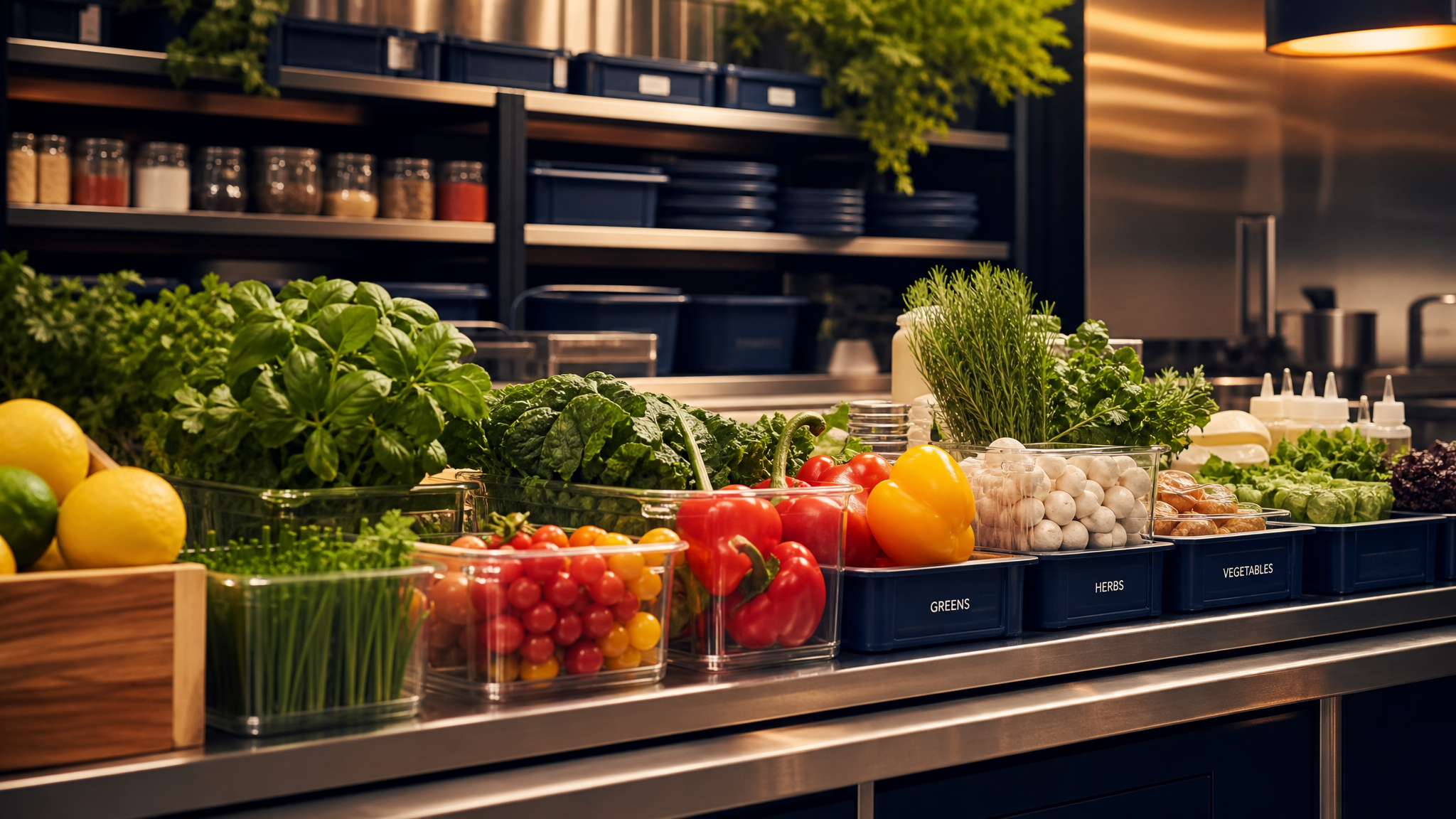
Food cost is the silent killer of restaurant profitability. You can pack the dining room every night and still lose money if your inventory is bleeding out the back door. Industry studies show the average restaurant wastes between 4% and 10% of its purchased food — money that goes straight into the trash.
AI inventory and waste reduction agents attack this problem from both ends. On the purchasing side, an inventory agent tracks usage in real time and predicts exactly how much of each ingredient you need, ordering at the right moment so nothing spoils on the shelf.
On the operational side, a waste reduction agent analyzes what is actually being thrown away and why. Are you over-prepping a slow-moving special? Is a portion size too large? The agent spots the patterns humans miss and recommends precise adjustments that add up fast.
There is a marketing upside too. When the system identifies ingredients approaching their use-by window, it can automatically suggest limited-time specials or promotions to move that inventory profitably instead of discarding it. Waste becomes opportunity.
The math is simple but powerful. For a restaurant doing $1.5 million in annual revenue, trimming food waste by even three percentage points can mean tens of thousands of dollars dropped straight to the bottom line. That is the kind of margin improvement that lets you reinvest, expand, or finally take a breath.